Rassians
Knights of St. Rasso (Rassians, the Gallimaufry, Gallimaufers)
Les Songes Drolatiques de Pantagruel:
Woodcuts as game material.
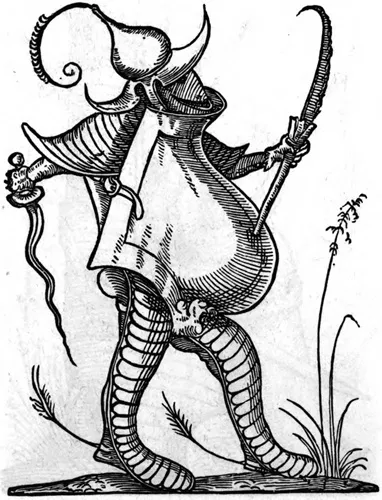
Officially, the name of the order is the Knights of St. Rasso, and members are referred to as Rassians. In everyday usage, though, the order is referred to as the Gallimaufry, and members are known as Gallimaufers.
Rasso himself lived during the era of the Earth Wars, long and brutal conflicts. He assembled a group of powerful and upright knights and established his order to train more of the same. Tales of their exploits are still told and retold and embellished and pastiched in the works of esoteric bards and round actors 1.
The Rassians will accept any applicant who swears to uphold to the best of their ability the order's knightly virtues. Potential members who swear the oath are shielded from prosecution for any previous minor crimes. They become initiates and must spend seven months of ascetic combat training in the order's monastery, then seven weeks of service to communities surrounding the monastery, and then seven days of meditation in one of the cells. After this period, an applicant becomes a full knight and receives the uniform of a Knight of St. Rasso: a bespoke set of sturdy full plate armor, made to fit one's anatomy regardless of species or shape.
Rasso lived to a very old age and passed leadership to the next eldest member of his order 2. Leadership has continued in the same way: the oldest current member leads the order, regardless of seniority of membership (or any other qualification).
As a result, the leadership of the Order is doddering. The training of new recruits (which one must assume had been rigorous under the direction of Rasso) is slipshod, and only the least focused applicants are culled during the process. (The only arm of the order that's remained strong is the smithy and its attendant logistics, maybe because of the direct and specific practices required and taught.)
Rasso was a brave and noble leader but not a legalist or a chronicler. The wars of his era have long since ended. He simply assumed that any future followers would meet his definition of knightly (the which he never set down in writing).
Current Knights of St Rasso tend to be terminally whimsical. Their ideas of knighthood and combat and war come from lieds and romances and puppet shows. A few low-grade ruffians are attracted by the full pardon for any minor malefaction, but they tend either to reform or to become overconfident in their new armor. Either decision solves the problem.
Perhaps more critically, he assumed that future knights would adhere to his definition of to the best of one's ability.
As it stands, the senescent leadership sends the knights on imagined quests, which they often ignore because they can't perform the tasks to the best of their ability (or which they delay attempting until they're more able, which works out to the same thing). Current knights chase their own larks and tilt at their own windmills. As such they've become a byword for unfocused but passionate wandering.
Rasso wanted to create an order of arrant knights, but ended up creating an order of knights errant.